
Create a memory badge
Design a paper badge for someone important. Add a symbol, color, or word that tells part of that person’s story. Share why you chose it.
Read. Wonder. Talk.
Use these simple ideas to help children explore the feelings, choices, and connections inside More Than a Snowman.
A shared reading guide
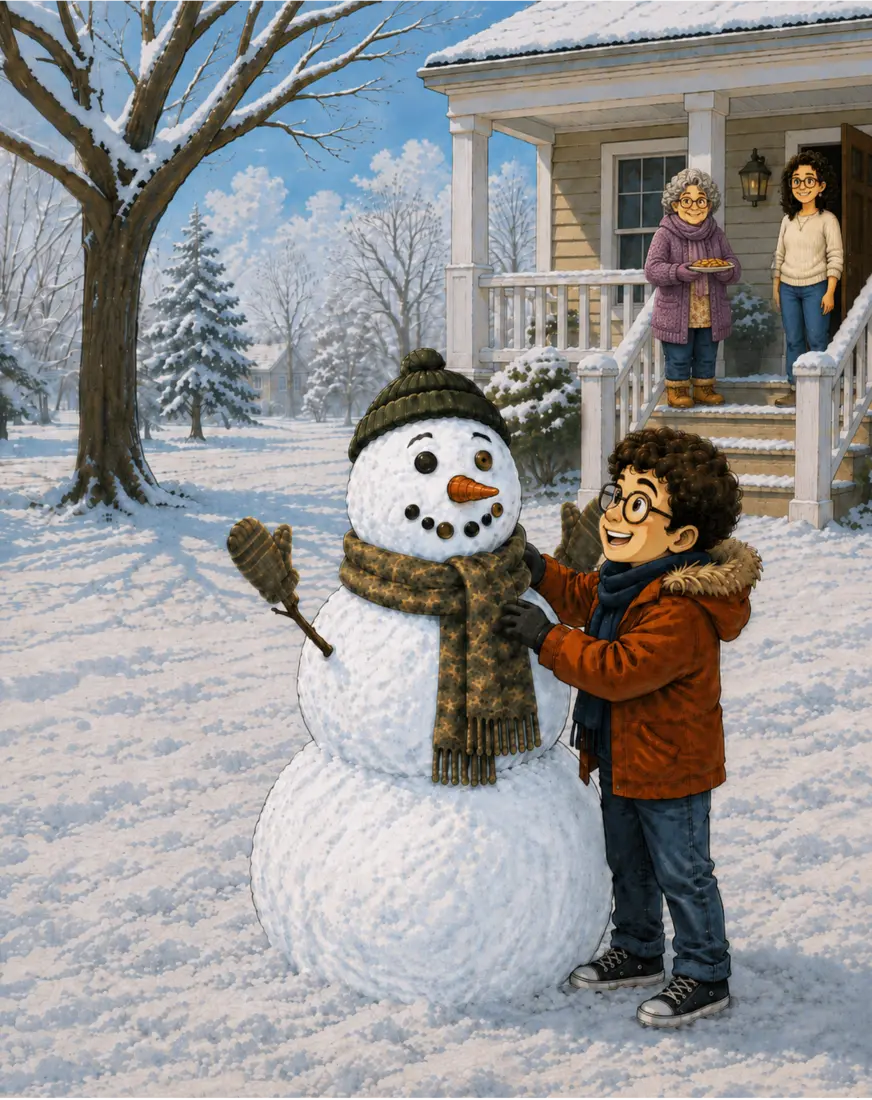
Children may connect first with Lucas missing his father, the neighbors helping, the decorated snowman, or the sadness of spring.
Follow what they notice. Give them time to look closely at the pictures, name emotions in their own words, and connect the story to moments from their own lives.
Suggested readers: Elementary-age children, families, classrooms, libraries, and community groups.
Conversation starters
Try it together
Design a paper badge for someone important. Add a symbol, color, or word that tells part of that person’s story. Share why you chose it.
Write one small helpful act on each strip of paper. Connect the strips as the acts are completed and watch the community chain grow.
Draw a house with a different story behind every door or window. Who lives there? What do they care about? How are the stories connected?
Themes to explore
Missing someone, asking for help, experiencing change, and finding hope.
Recognizing the sacrifices of military families and others who serve.
How individual memories and actions can become part of something shared.
Reading visual details, noticing seasons and light, and telling stories with symbols.
A gentle note for grown-ups
The story touches on deployment, separation, remembrance, vandalism, and change. Some children may connect these moments to personal experiences. Invite conversation without requiring it, avoid asking a child to share private family details in a group, and offer drawing or writing as another way to respond.
Contact Murphy’s Story House about readings, classroom use, or future resources.